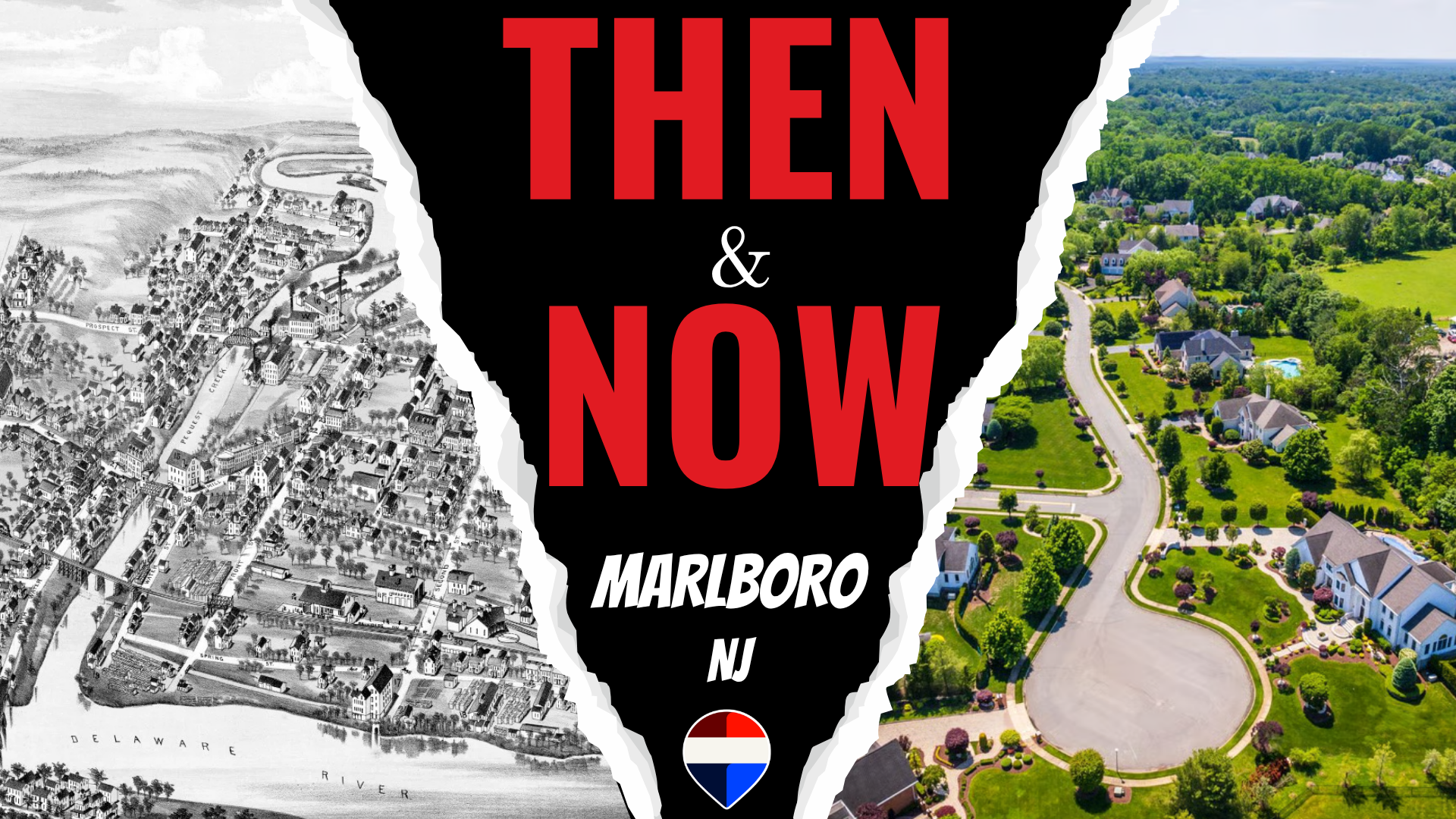
There is a story hiding underneath every beautiful lawn, every tree-lined street, and every sought-after cul-de-sac in Marlboro Township — and it is a story that most residents have never heard. Before the top-rated schools, before the spacious four-bedroom colonials, before the bidding wars and the sold signs and the $800,000 median sale prices, Marlboro Township was something else entirely. It was farmland. Potato fields. Dairy barns. Apple orchards.
The real estate evolution of Marlboro Township is one of the most fascinating transformation stories in all of Monmouth County — and understanding it is not just a fun history lesson. It is also the key to understanding why Marlboro Township real estate holds its value so powerfully today, and why this community continues to attract buyers from across New Jersey and New York year after year.
So pull up a chair. We are going back to the beginning. Back to the very beginning of Marlboro Township.

Marlboro Township’s Roots: Farms, Fields, and a Whole Lot of Potatoes
Long before anyone was searching for Marlboro Township real estate listings online, this corner of Monmouth County was being farmed by English, Scottish, and Dutch settlers who arrived as early as the 1600s. The town was formally incorporated in 1848, splitting off from Freehold Township, with a population of just about 1,500 people.
For most of the 1800s, life in Marlboro revolved entirely around agriculture. Dairy farming was a cornerstone of the local economy. Potatoes, tomatoes, and apples were grown in abundance across the rolling hills of the township. In fact, the Marlboro region was at one time among the most significant potato-growing areas in the entire nation — a fact that would probably surprise the families now hosting soccer games and backyard barbecues on those same acres.
The hamlets that dotted the township during those early years carry names that still appear on maps today: Morganville, Robertsville, Wickatunk, Bradevelt, Topanemus, and Pleasant Valley. Each was a small, self-contained rural community connected by dirt roads and, eventually, a railroad line. That railroad — begun as the Monmouth County Agricultural Railroad in 1867 and completed by 1877 — ran directly through Marlboro with stops in Bradevelt, Marlboro, Morganville, and Wickatunk. It was originally built to help farmers get their goods to larger markets in Matawan and New York City.
What is remarkable is that even the name Marlboro Township carries agricultural DNA. The township takes its name from the marl soil deposits that define the region — a calcium-rich clay long prized by farmers as a natural fertilizer. The very ground beneath Marlboro’s neighborhoods was once considered farming gold.
By 1880, the township’s population had grown to roughly 2,200 people. It would largely stay that way for decades. Nothing about Marlboro in the 1800s or early 1900s hinted at the suburban powerhouse it would eventually become.
The Turning Point: World War II and the Road to Suburbia
The story of Marlboro Township real estate — like the story of so much of suburban America — truly begins after World War II.
As veterans returned home, started families, and sought out affordable space beyond the congestion of New York City, the demand for suburban housing exploded across New Jersey. The state and county governments responded by investing heavily in road infrastructure, building new highways, and improving existing routes throughout Monmouth County.
For Marlboro Township, this was the moment everything changed.
With Route 9 on the west, Route 34 on the east, Route 79 running north to south, and Route 18 cutting through the township, Marlboro was suddenly accessible in ways it had never been before. Commuters who worked in nearby corporate hubs or made the trip into New York City realized they could have a home with a yard, clean air, great neighbors, and a real sense of community — without sacrificing the career opportunities of the metro area.
The first large-scale housing development arrived in the 1960s. And once that door opened, it never closed.

Decades of Growth: How Marlboro Became One of New Jersey’s Most Desirable Towns
The transformation of Marlboro Township real estate from rural to suburban did not happen overnight. It unfolded across several distinct chapters, each one building on the last.
The 1960s and 1970s: The First Wave
Housing developments began replacing farm fields throughout the 1960s, and the shift gained serious momentum through the 1970s. After 1970, Marlboro became a recognized and growing suburb for people working in New York City and in the large corporate campuses that had begun developing throughout central New Jersey. The railroad that once served potato farmers was fading into history — the line was largely abandoned by the 1970s — but the roads that replaced it made Marlboro even more accessible to a new generation of residents.
The population grew steadily during this period. The town was changing, but it still retained much of its open, rural character. Longtime residents remember a Marlboro where farmstands lined the roads and horses still grazed behind neighborhoods where children now ride bikes.
The 1980s and 1990s: The Boom
If the 1960s and 1970s planted the seeds, the 1980s and 1990s were when Marlboro Township real estate truly bloomed. Housing construction accelerated dramatically. The dominant style of this era was the large four- or five-bedroom colonial — the kind of family home that became the signature of suburban Monmouth County life.
By the 1990 Census, the population of Marlboro Township had reached 28,000. In just a few decades, the township had gone from a farming community of a few thousand residents to a bustling suburb with tens of thousands of families, multiple new schools, shopping centers, and an unmistakable sense of established community identity.
The growth was so substantial that the township was eventually forced to implement Stream Corridor Preservation Restrictions — protective regulations designed to prevent overdevelopment near wetlands. Even in its boom years, Marlboro was thoughtful about preserving the natural character that made it worth living in.
The 2000s and Beyond: Quality Over Quantity
As the new millennium arrived, the character of Marlboro Township real estate development shifted again. The trend moved away from volume toward quality. Larger estate homes became more prevalent. The township attracted increasingly affluent buyers who were drawn not just by the space and accessibility, but by the exceptional school system that had developed alongside the growing community.
By the 2000 Census and beyond, Marlboro’s population had climbed toward 40,000 residents. The township had evolved from a place people moved to because it was affordable into a place people actively sought out because it was desirable. That is a profound shift — and one that has enormous implications for property values.

What History Tells Us About Marlboro Township Real Estate Today
Here is where the history lesson becomes genuinely valuable for anyone who owns — or is thinking about owning — a home in Marlboro Township.
Marlboro did not become a desirable suburb by accident. It became one through a combination of smart geography, deliberate infrastructure investment, strong school development, and an organic community culture that took root over generations. Those are not temporary factors. They do not disappear in a down market. They are the structural foundation beneath every single home in this township.
Today, Marlboro Township real estate reflects all of that history in the most tangible way possible: home values.
The median sold home price in Marlboro Township sits around $800,000 — up more than 5% from the year prior. Homes are selling in an average of 20 to 25 days. Buyers are routinely offering at or above the asking price, and with only around 80 active listings in the township at any given time, competition remains fierce. Niche.com consistently ranks Marlboro Township as one of the best places to live in all of New Jersey, citing its public schools, family-friendly atmosphere, parks, and overall quality of life.
The same qualities that drew the first suburban families to Marlboro in the 1960s are drawing buyers here today — just at a far more sophisticated level. Today’s Marlboro buyer is typically well-educated, financially strong, often coming from New York City or North Jersey, and specifically seeking out the combination of top-tier schools, community character, and accessible location that Marlboro has delivered for decades.
The Agricultural Legacy That Still Exists
One of the most beautiful parts of Marlboro’s story is that its agricultural roots have not been entirely erased. Marlboro Township still ranks among the top agricultural municipalities in Monmouth County, with approximately 2,137 acres of farmland-assessed land still remaining — about 11% of the township’s total acreage. The township has an active farmland preservation program working to protect what remains.
That green, open character — the breathing room that the old farms once provided — is actually part of what makes Marlboro Township real estate so appealing to buyers today. People are not just buying a house here. They are buying into a landscape that still has trees, open sky, and a pace of life that feels genuinely different from the crowded towns to the north.
IMAGE 4 File name: marlboro-township-nj-preserved-farmland-open-space.jpg Alt text: Preserved farmland and open space in Marlboro Township NJ, contributing to strong real estate values. Suggested image: A photo of one of Marlboro’s remaining farm properties or open green spaces — Big Brook Park is a great option here
What This Means If You Are Thinking About Selling
Understanding the history of Marlboro Township real estate is not just interesting — it is strategic. When you know WHY this community holds its value so powerfully, you understand exactly what to highlight when marketing your home to today’s buyers.
Buyers who are considering Marlboro are not just shopping for square footage. They are buying into a community with deep roots, a proven track record, and all the qualities — schools, location, safety, character — that consistently drive demand year after year.
If you are thinking about listing your home, now is an exceptional time to do it. Low inventory, strong buyer competition, and a median sale price sitting near record highs all point in the same direction: this market continues to reward well-prepared sellers who work with an agent who knows this community inside and out.
I have been selling homes in Marlboro, Morganville, and across Monmouth County for over 20 years. I know the history of this town. I know the neighborhoods. I know the buyers. And I know how to position your home to get you the best possible outcome in today’s market.
Let’s talk about what your home is worth and what a successful sale could look like for you — no pressure, no obligation, just a real conversation with someone who genuinely loves this community.
👉 Explore more Marlboro real estate insights on the CoriSellsNJ Real Estate Blog
📊 Read next: Why Marlboro Township Home Values Keep Climbing — And What Your Home Might Be Worth in 2026
📋 Also worth reading: Marlboro NJ Home Values vs. Monmouth County — 2025 Trends
📞 Ready to talk Marlboro Township real estate? Call or text Cori Dunphy at RE/MAX — 732-213-0325 — or visit CoriSellsNJ.com
💬 Let’s Make Your Real Estate Goals Happen

About Cori Dunphy
Hi, I’m Cori Dunphy — a lifelong Monmouth County resident, Marlboro homeowner, and full-time REALTOR® with RE/MAX Central.
For more than 25 years, I’ve helped buyers and sellers throughout Monmouth, Middlesex, and Ocean Counties navigate one of life’s biggest decisions with confidence. Whether you’re purchasing your very first home, relocating to New Jersey, moving into a 55+ community, upgrading to your forever home, or preparing to sell, my goal is simple: to give you honest advice, expert guidance, and the local knowledge you won’t find on a national real estate website.
I created this website to be more than just a place to search for homes. It’s a growing resource filled with neighborhood guides, local market updates, buyer and seller tips, community spotlights, and everything you need to make informed real estate decisions right here in Monmouth County.
If you’re still researching, keep exploring. If you’re ready to make your move, I’d be honored to help.
Continue Exploring
🏡 Browse more real estate articles and local guides on CoriSellsNJ.com
🎥 Watch neighborhood tours, market updates, and home-buying tips on YouTube
📬 Subscribe to my newsletter for local market insights, community news, and new listings
📊 Explore town guides for Marlboro, Freehold, Manalapan, Holmdel, Colts Neck, Aberdeen, Matawan, Hazlet, Middletown, and communities throughout Monmouth County
Let’s Connect
📞 Call or Text: 732-213-0325
📧 Email: [email protected]
🌐 Website: CoriSellsNJ.com
📘 Facebook: Facebook.com/CoriSellsNJ
📸 Instagram: @CoriSellsNJ
🎥 YouTube: @CoriSellsNJ
💼 LinkedIn: Cori Dunphy
🎵 TikTok: @CoriSellsNJ
Let’s Get You Home — I’ll Bring the Coffee. ☕🏡
Real estate is about so much more than contracts and closing dates—it’s about finding the place where your next chapter begins.
Whether you’re ready to buy next week, sell next year, or you’re simply looking for honest answers from someone who truly knows Monmouth County, I’m here whenever you need me.
I look forward to helping you make your next move your best move.
